Montana Approves Northern Leopard Frog Restoration West of the Continental Divide
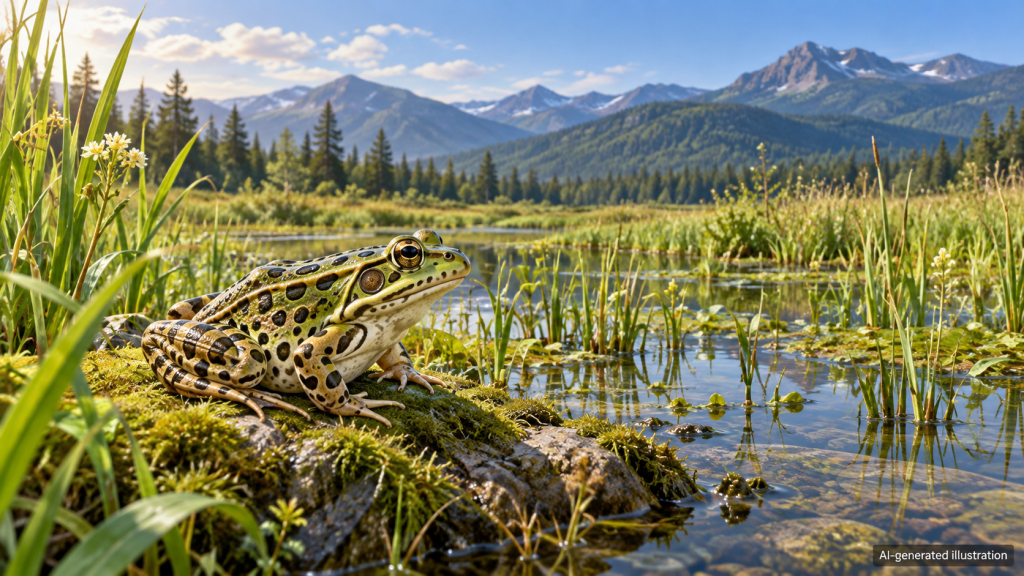
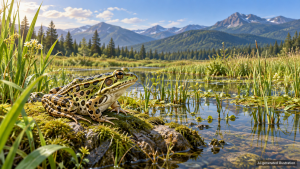
Montana’s Fish and Wildlife Commission has approved northern leopard frog relocations intended to restore populations west of the Continental Divide. Montana Fish, Wildlife and Parks confirmed the decision in an October 19 announcement following the commission’s October 14 meeting.
The approval advances a defined conservation program rather than documenting completed releases. Supporting materials describe initial transplants planned for spring 2027 and 2028, with possible supplemental transplants through 2037 depending on recovery success.
Northern leopard frogs are identified as a Species of Greatest Conservation Need in Montana’s State Wildlife Action Plan. The agency’s proposal targets public-land sites in its northwestern and west-central regions, including the Blackfoot and Seeley-Swan valleys.
The species remains common east of the Divide, but native populations disappeared from western Montana. Agency documents identify fungal disease as a suspected major contributor to those losses, alongside other possible pressures. A reintroduced population on the Flathead Indian Reservation has become self-sustaining, providing experience for the new effort.
The environmental assessment describes collecting egg masses from healthy eastern populations, hatching them at a rearing facility and releasing tadpoles into suitable western wetlands. The approach includes safeguards for both the animals being moved and their source populations.
Collectors would leave at least half the observed egg masses at each source site. Transport procedures call for temperature monitoring, gradual adjustment to different water conditions and checks for disease or parasites. Source water would be disposed of away from water bodies to reduce the risk of moving aquatic invasive species.
These procedures are part of the documented project design, not evidence that transport has already occurred. Likewise, the successful tribal reintroduction offers a useful precedent, not a guarantee that every additional site will support a lasting population.
Why This Matters for Animals
The commission’s action supplies a required authorization for restoring an animal to part of its historical range. It also connects conservation goals with practical precautions around collection, transport and release.
The meaningful outcome will be frogs surviving and reproducing in suitable habitat—not simply the number moved. Disease risks, conditions at release sites and effects on source populations will remain important as the program proceeds. Approval is a concrete step forward; population recovery still has to be demonstrated.
Source: Montana Fish, Wildlife and Parks: October commission decisions