Former Therapy Donkey Killed by Hunter at South Carolina Animal Sanctuary
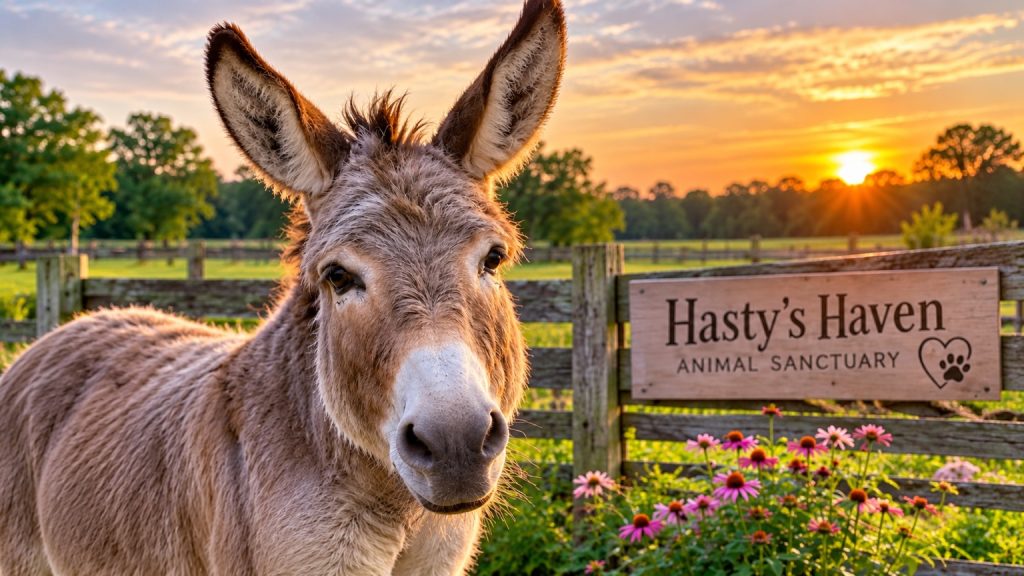
A beloved donkey who once helped children with special needs has been killed in a shooting at a South Carolina animal sanctuary, raising serious concerns about hunting near homes and animal refuges.
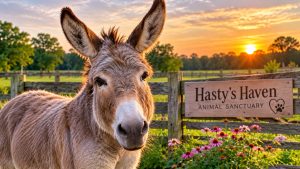
Angelique lived at Hasty’s Haven in Belton, South Carolina, where she and three other donkeys had found a permanent home after serving as therapy animals. The gentle animals also participated in educational activities and welcomed visitors to the sanctuary.
A Fatal Shooting at the Sanctuary
On October 11, Angelique was fatally shot while inside her enclosure.
According to the South Carolina Department of Natural Resources, a hunter on neighboring property reported firing at a deer and missing, with the bullet striking Angelique instead.
Authorities charged the hunter with negligent use of a firearm and hunting within 300 yards of a residence.
A Community Mourns Angelique
For the people who cared for Angelique, the loss has been devastating. Sanctuary founder Joann Kelly has also expressed concern about the danger the shooting posed to the people and other animals on the property.
A Life Lost, and Questions That Deserve Answers
Angelique was not simply another animal living on a farm. She was an individual with a history, relationships, and a place in a community that cared for her.
Her death raises serious questions about hunting near homes, animal sanctuaries, and other occupied properties.
Whatever the hunter’s intended target, Angelique was killed inside an enclosure where she should have been safe.
No legal proceeding can restore her life. But accountability and stronger attention to hunting safety may help prevent another animal from suffering the same fate.
Sources: World Animal News and reporting by FOX Carolina/WYFF.
Angelique Deserved Better: When the Right to Hunt Endangers Innocent Lives
DefendAnimals.net | Editorial Commentary
Angelique was supposed to be safe.
She lived at Hasty’s Haven, an animal rescue sanctuary in Belton, South Carolina, where she was cared for alongside other rescued animals. A former therapy donkey who had helped children with special needs, Angelique was known for her gentle nature.
On October 11, 2026, she was shot and killed while standing in her pen.
The hunter responsible reportedly told authorities he had been aiming at a deer, missed, and struck Angelique instead.
I am opposed to hunting. I make no apologies for that position. I believe animals have an inherent right to live without being pursued and killed for recreation.
But I also recognize that hunting is legal in South Carolina and throughout much of the United States.
That brings us to a much larger question.
Where does the legal right to hunt end, and where does the responsibility to protect innocent lives begin?
The Second Amendment Is Not a License for Recklessness
The Second Amendment protects the right to keep and bear arms. It does not grant anyone an unrestricted right to discharge a firearm wherever they please, regardless of the danger to others.
Likewise, a hunting license is not permission to endanger neighboring families, their homes, or animals living peacefully on private property.
Even those who strongly support hunting and gun ownership should recognize the distinction.
A firearm carries enormous responsibility. Before pulling the trigger, a hunter must identify the target, understand the surrounding environment, and know what lies beyond the intended target.
In Angelique’s case, something went terribly wrong.
According to the sanctuary, the hunter fired in the direction of a pen containing multiple animals and toward the family’s home.
What if that bullet had missed Angelique and struck a person instead?
What if a child had been playing outside? What if a sanctuary volunteer had been tending to the animals? What if someone had simply been standing in the yard?
Would we still be describing this as an unfortunate hunting accident?
The potential consequences were far greater than the death of one animal, as tragic as that death was.
An Accident—or Something More?
The hunter reportedly claims he was shooting at a deer.
Perhaps he was.
But that explanation deserves scrutiny.
Was there actually a deer in his sights? Did he mistake Angelique for a deer? Could he see the sanctuary’s fencing or the other animals? Was he aware of the nearby residence?
Or did he fire without adequately identifying what he was shooting at?
We do not know.
Nor do we have evidence establishing that Angelique was deliberately targeted or used for target practice. Those possibilities should not be presented as facts.
But the circumstances demand a thorough investigation.
And even if this was entirely accidental, an accident does not automatically absolve someone of responsibility.
A person who cannot distinguish a safe shot from one that endangers a neighboring sanctuary and home should face serious scrutiny before being permitted to hunt again.
At a minimum, authorities should consider whether a suspension of hunting privileges, mandatory hunter-safety retraining, or other restrictions are warranted under applicable law.
Where Is the Accountability?
The hunter reportedly faces charges of negligent use of a firearm and hunting within 300 yards of a residence.
According to published reports, the potential punishment could amount to a fine of just $200 and up to 30 days in jail.
An animal is dead. A family is grieving. Other animals were endangered. And a bullet was fired in the direction of a family home.
Is that really sufficient accountability?
South Carolina’s animal-cruelty law, Section 47-1-40(B), provides felony penalties for certain acts of cruelly killing animals, including imprisonment of up to five years and a $5,000 fine.
Whether that statute applies here requires consideration of the evidence, the legal elements of the offense, and the law’s hunting-related exemptions.
But surely the public is entitled to ask whether those provisions were considered.
And there is another question that cannot be ignored.
Should someone who fires a rifle under these circumstances be permitted to continue hunting without further scrutiny?
If the hunter truly mistook Angelique for a deer, that raises serious questions about his ability to identify a target. If he was aiming at a deer and missed, why was he firing in a direction where a sanctuary full of animals and a family home were potentially endangered?
Neither explanation is reassuring.
I believe his hunting privileges should be reviewed, and appropriate restrictions or mandatory safety retraining should be considered.
The Second Amendment does not eliminate responsibility. Neither does a hunting license.
And calling a fatal shooting an accident does not erase its consequences.
Hunting Rights Must Come With Responsibility
Some will argue that hunting accidents happen.
Yes, they do.
But calling something an accident does not make it acceptable.
We establish firearm-safety rules precisely because bullets do not distinguish between a deer, a donkey, a family pet, or a human being.
I oppose hunting, but even someone who believes hunting is a legitimate activity should be able to agree that its practice must never come at the expense of innocent neighbors and the animals in their care.
A hunter’s freedom does not supersede another family’s right to safety.
A hunting license is not a license to kill indiscriminately.
And a mistake involving a deadly weapon should not be dismissed simply because the person holding that weapon says the outcome was unintended.
Her Name Was Angelique
We can debate hunting rights, firearm laws, criminal penalties, and the meaning of negligence.
But amid all those arguments, let us not forget the life that was lost.
She was not just a donkey in a field.
She was a former therapy animal who helped children with special needs. She brought comfort to people. She had a home, a family, and other animals who shared her life.
She mattered.
And because someone fired a rifle, that life is gone.
There must be accountability for that.
She wasn’t just a donkey. She had a name.
Her name was Angelique.